Learn — By WATMM Desk —
Home studio acoustic treatment on a budget: what to buy first
Most home studios spend their first treatment money on thin foam tiles, which do almost nothing below the midrange. This guide sets out a buying order based on published absorption data and acoustician advice: thick bass traps in the corners first, then panels at the first reflection points, then everything else.
Key facts
- Published test data shows 1-inch Owens Corning 703 fibreglass absorbs 0.11 of sound at 125 Hz, 2-inch absorbs 0.17 and 4-inch absorbs 0.84 (ATS Acoustics table, Type A mounting).
- Sound On Sound (Hugh Robjohns, 2004) says room reflections can lift bass by up to 6 dB or cut it by 20 to 30 dB depending on position, and that EQ cannot fix it.
- Acoustician Ethan Winer recommends bass traps in all corners as a minimum, and a mirror to find first reflection points.
If you make music in a bedroom, the room shapes what you hear more than your speakers do. The good news is that the fix is not expensive. The bad news is that the cheapest-looking fix, a box of thin foam tiles, is mostly the wrong one. This guide gives a buying order for a small budget, based on published absorption data and the advice of people who measure rooms for a living.
Treatment is not soundproofing. Absorbers change how sound behaves inside your room. They will not stop your neighbours hearing your kick drum, and nothing in this guide will.
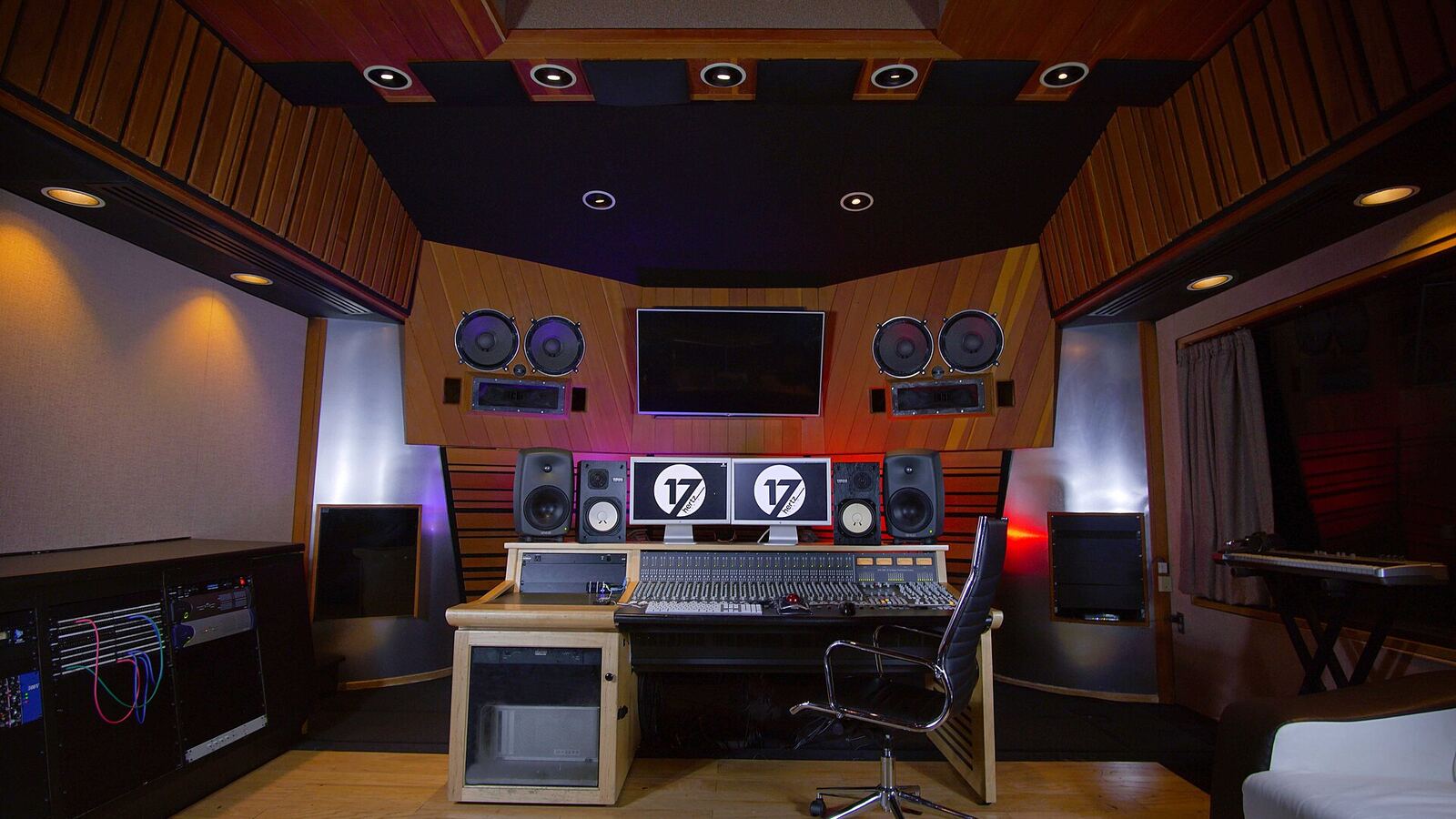
Why the room matters more than you think
In a small room, bass bounces between parallel walls and builds up or cancels at different spots. Hugh Robjohns, writing in Sound On Sound, says these reflections can raise the level at a given frequency by up to 6 dB or cut it by 20 to 30 dB, depending on where you sit. He also says electronic EQ can't correct it, because the response changes from place to place in the room. Boost the dip at your chair and you have made it worse a metre away.
That is the root of the classic bedroom-mix problem: a bass line that sounds fine at home and booms or vanishes everywhere else. If that sounds familiar, our guide to bedroom mix mistakes has listening tests that help you tell room problems from mix problems.
What the numbers say about thickness
Absorbers are rated by how much sound they soak up at each frequency, from 0 (none) to about 1 (nearly all). ATS Acoustics publishes a table of lab figures for common boards, measured flat against a solid wall. Here is what it lists for Owens Corning 703 rigid fibreglass, the board most DIY guides name:
| Thickness | 125 Hz | 500 Hz | 1,000 Hz | NRC |
|---|---|---|---|---|
| 1 inch | 0.11 | 0.68 | 0.90 | 0.70 |
| 2 inch | 0.17 | 1.14 | 1.07 | 1.00 |
| 4 inch | 0.84 | 1.24 | 1.08 | 1.15 |
Read the 125 Hz column. A 1-inch board barely touches the low end, while 4 inches absorbs most of it. The midrange and highs are handled well even by thin material. So thin products make a room sound less echoey to clap in while leaving the bass problem untouched. Coefficients above 1 are a quirk of the lab test method, not magic.
The same table lists mineral wool. ROCKWOOL's 2-inch Comfortboard 80 is shown at 0.43 at 125 Hz, against 0.17 for 2-inch 703, so denser mineral wool boards can do more in the low end at the same thickness. ATS also notes that bass absorption improves with corner mounting or extra layers.
Foam does worse. Ethan Winer, an audio writer who publishes a long guide on room treatment, writes that sculpted foam is low density and that "removing some of the material reduces foam's effectiveness at low frequencies". Robjohns says in Sound On Sound that "the efficacy of the typical corner-mounting foam bass traps is not particularly good".
Step 1: bass traps in the corners
Bass collects in corners, which makes them the most efficient place for absorbers. Winer's minimum is plain: "At the minimum I recommend placing bass traps in all of the corners."
On a budget, this means thick panels of rigid fibreglass or dense mineral wool, wrapped in breathable fabric and set across the corner. A panel straddling a corner leaves a large air gap behind it, which helps. Winer says absorbent material works best with an air gap of a quarter of the wavelength of the frequency you want to absorb, so more gap and more thickness both push absorption lower.
If you can only afford two traps, put them in the corners behind your speakers. That is a reasonable call rather than a published rule: those are the corners closest to the sources, and they're easy to reach.
Robjohns adds a reassurance. You will not over-treat the bass: "there is almost no restriction to the amount of low-frequency absorption other than cost and aesthetics." He also warns that the bass may sound louder once traps go in, because cancellations are being removed.
Step 2: panels at the first reflection points
Next comes the sound that bounces once off a nearby surface and reaches your ears just after the direct sound, blurring the stereo image. Winer says the side-wall reflections reach you first, and the floor and ceiling matter too if they're untreated.
To find the spots, Winer suggests: "The easiest way to tell where to place absorption to avoid early reflections is with a mirror." Sit in your mix position. Have a friend slide a mirror along the side wall, and wherever you can see a speaker in it, a panel goes there. Repeat on the other wall and on the ceiling above the desk.
Here 2-inch boards are enough, because these reflections are mostly mid and high frequencies, and the table shows 2-inch board is already near full absorption from 500 Hz up. Spacing panels a few centimetres off the wall still helps a little.
Step 3: everything else, in order
Only after the corners and first reflections are covered:
- More bass trapping. Add depth or layers to the corner traps you have, or add traps on the rear wall.
- A ceiling panel above the listening position, if step 2 didn't cover it.
- The rear wall. Winer says the rear wall is less critical than the side walls in a stereo mix room.
- Diffusion, last. Small rooms rarely have the distance for diffusers to work well, and they cost more.
What to skip
- Thin foam packs. By the data above, they treat the frequencies that were least broken.
- Room-correction EQ instead of traps. Robjohns's point stands: EQ fixes one seat, not the room. Correction software can be a final polish after treatment, not a replacement for it.
- Unrated household fixes. We could not find published test data for things like egg boxes or mattresses, so we will not tell you what they do. Thick boards have numbers behind them.
A safety note
Fibreglass and mineral wool shed fibres when cut. Wear gloves, long sleeves and a dust mask while you work, and cover finished panels in fabric. Check the manufacturer's safety sheet for the product you buy.
What we think
The music-tech conversation in 2026 is mostly about software: AI mastering, stem separation, generated parts. None of it can hear past a room that adds 20 dB of hidden swing to your low end. If an artist has a small budget and asks whether to buy a plugin or four corner traps, we would say traps, every time. The plugin will still be there next year, and it will work better in a room that tells the truth.
We also think the market for treatment is upside down. The products easiest to buy are the ones the published numbers say do least. Our rule of thumb: if a product doesn't publish absorption at 125 Hz, assume it is small, and spend your money on something that does.
This guide covers desk research, not a measured room. If you treat your space and measure it, we would like to hear what changed.
Sources
- Acoustic Treatment and Design for Recording Studios and Listening Rooms, Ethan Winer (primary source). Accessed 24 Oct 2026.
- Selecting the Right Acoustic Material, ATS Acoustics (primary source). Accessed 24 Oct 2026.
- Q. How can I address the uneven bass response in my studio?, Sound On Sound. Accessed 24 Oct 2026.
Researched with AI assistance, written and checked by WATMM Desk.